“Fire Weather” is a term that is used in the industry, and likely has different meanings for everyone. To the officer with a low risk appetite, it’s any time it’s not raining. To a seasoned fire fighter, it’s those days where the hairs on his neck stand up.
PyroRisk uses that term to capture weather that has a moderate, or higher, chance of causing significant destruction. (Even that term is vague, but intentionally.)
Here’s a helpful start of a definition: “Conditions that mix enough dry wind and dry vegetation to make it difficult to prevent initial spread, and difficult to protect structures”.
It’s different for every region. In California, we started with 56 MPH gust (or higher) with 20% relative humidity (or lower) during a Red Flag Warning. California utilities are more conservative than that now, and use the dryness of fuels as part of their formulas.
For most regions, winds speeds well above normal, with lower than usual relative humidity, and lower than normal fuel moisture is a good start for a conversation. How much above/below normal is where data analysis and risk appetites come in.
PyroRisk has access to years of fire and weather history and can help utilities decide what reasonable “fire weather” is for various operational procedures, including PSPS thresholds.
As will be discussed in future blogs, nearly every major fire that was associated to a utility since 2000 has been during significant fire weather. Not your run-of-the-mill dry, breezy day.
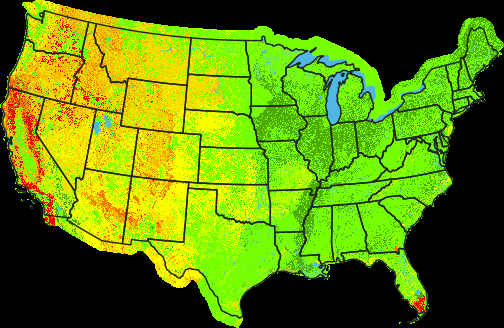
Data suggests the red places on the PRZ map (linked below) may have PSPS-level fire weather about 5 times a year. The green areas might have it once every 50 years. With the orange and yellow in between. Don’t let California’s PSPS experiences scare you into thinking you need to shut off your power several times a year.